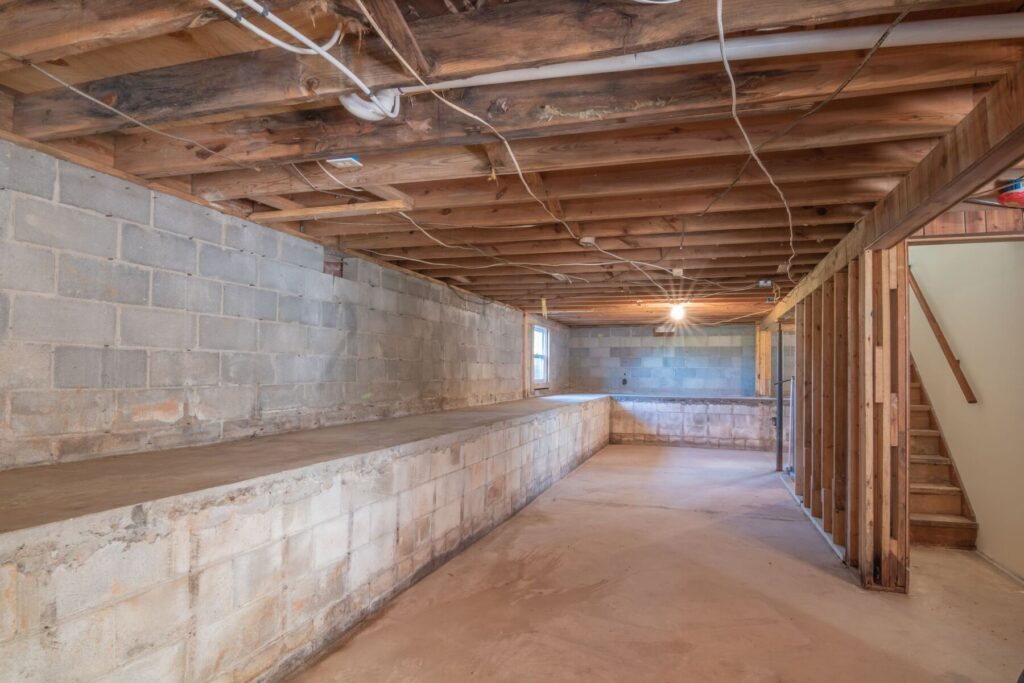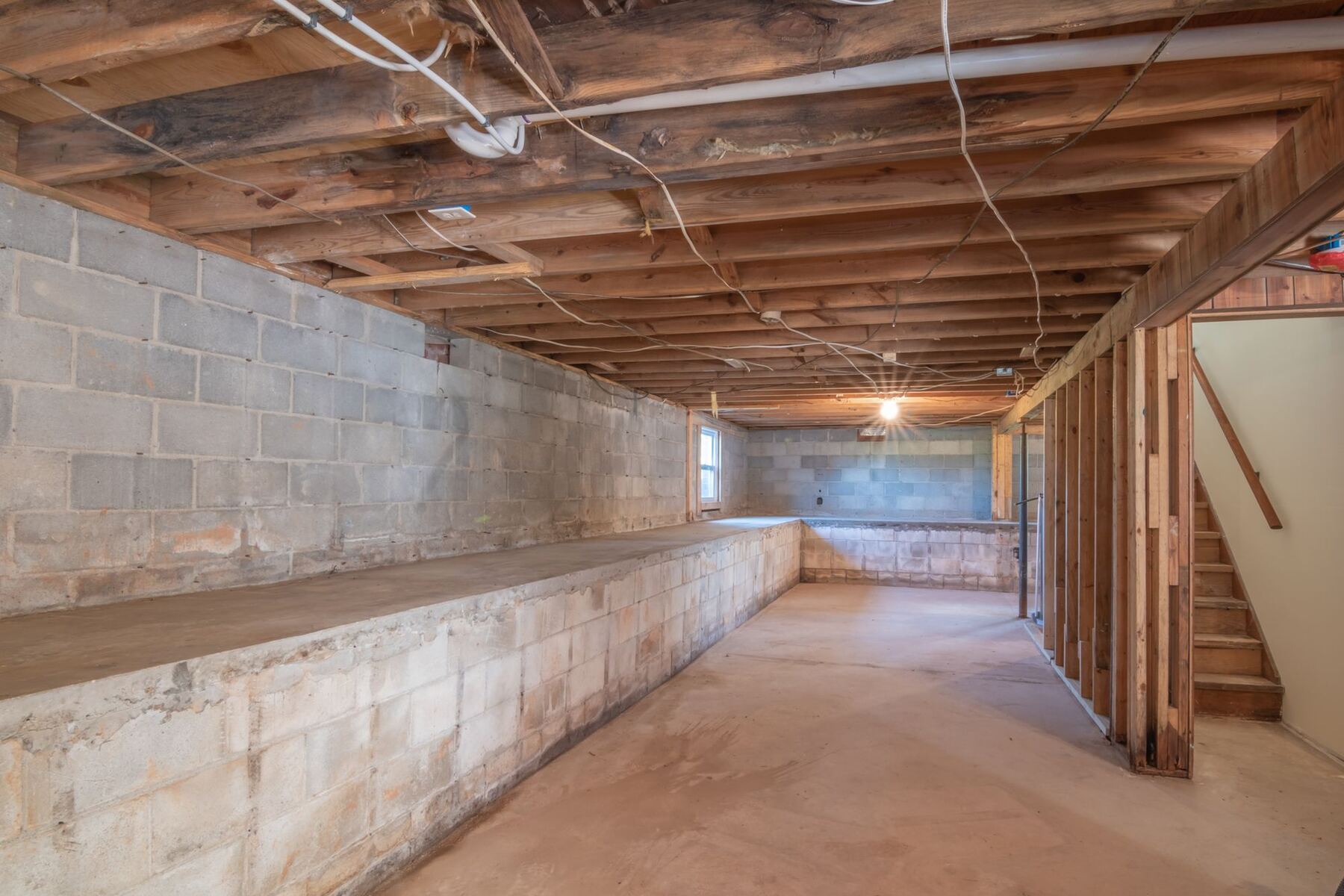
Water in a basement usually comes through the joint where the wall meets the floor, through cracks, or straight through block walls that have soaked up groundwater. Interior waterproofing handles water that has already reached the wall. Exterior waterproofing stops it at the outside face of the foundation.
What you’ll notice
- Wet floor along the base of a wall after heavy rain
- Damp or dark patches on block or poured walls
- White, chalky crust on the walls (efflorescence)
- A musty smell, peeling paint, rusty shelf legs
- A sump pump that runs constantly, or no sump at all
Why it happens
North Atlanta sits on Piedmont red clay. Clay holds water and drains slowly, so after a storm the soil around a foundation stays saturated and presses that water against the walls. Gutters that dump at the corners and ground that slopes toward the house make it worse.
What we check on the inspection
- Where the water shows up inside, and after what kind of rain
- Gutters, downspouts and where they discharge
- The grade around the house
- Wall cracks, the cove joint and any existing drain or sump
- Whether the problem is water coming in or humidity condensing
How it gets fixed
Inside, the usual fix is an interior drain channel along the footing that collects water and carries it to a sump pump, with a vapor barrier on the walls. Outside, it means digging down to the footing, sealing and membraning the wall, and laying a footing drain. Often the cheapest part of the answer is outside: getting roof water and surface water away from the house first.