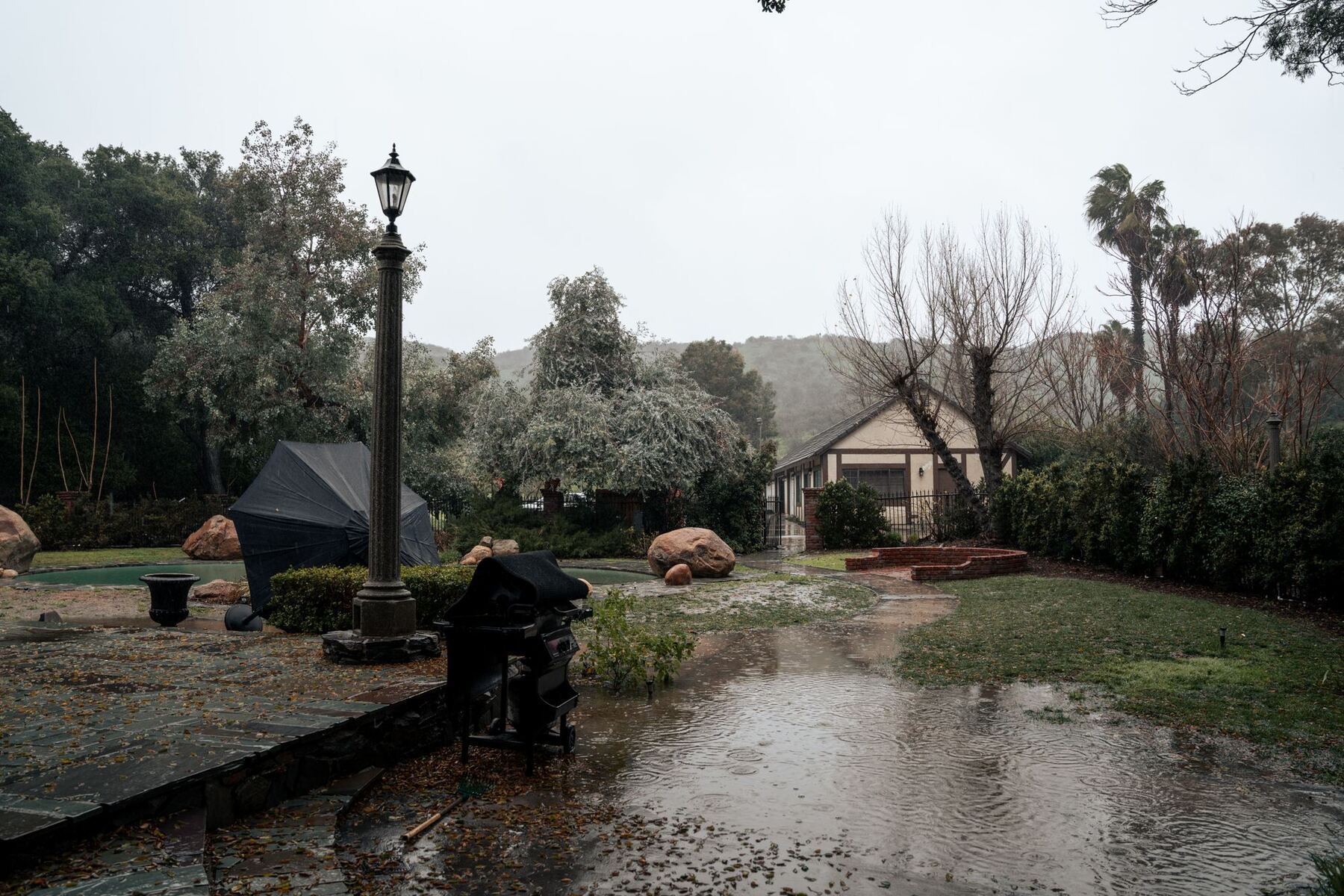
Standing water means the ground can’t take water as fast as it arrives, or the water has nowhere lower to go. We work out which, and then give the water a route away from the house.
What you’ll notice
- Puddles that last a day or more after rain
- Soggy, spongy patches and dead grass
- Water pooling against the foundation or on a patio
- Mosquitoes, moss and mud washing onto walkways
- A low spot where a neighbour’s runoff collects
Why it happens
Red clay soaks up very little water once it’s wet. Yards that were graded flat, compacted during construction, or sit lower than the street or the house next door collect runoff with nowhere to send it.
What we check on the inspection
- Where the water comes from: roof, neighbours, the street, or groundwater
- High and low points across the yard
- Where it can legally and practically be discharged
- Gutter and downspout routing
How it gets fixed
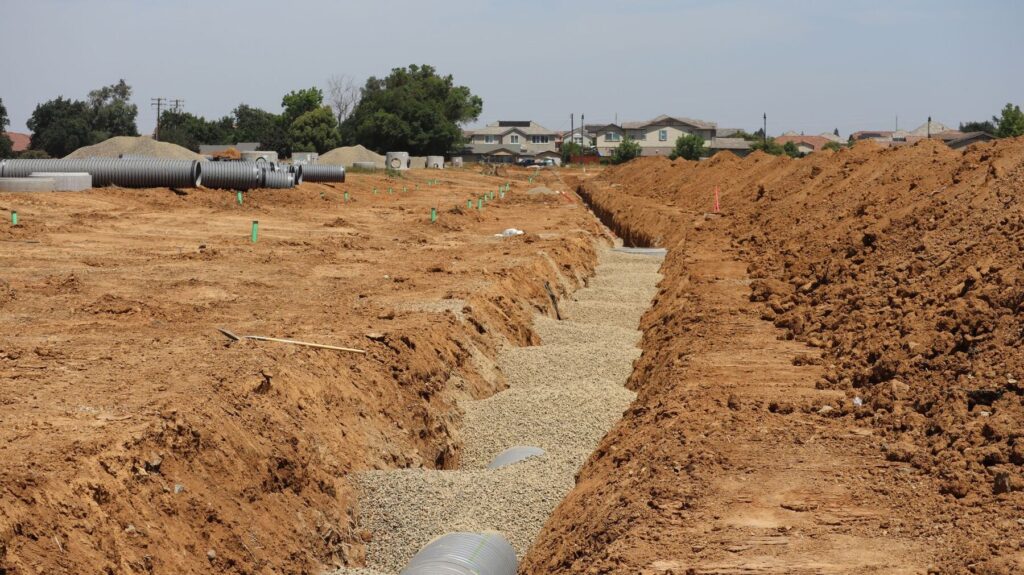
Depending on the yard: French drains or catch basins in the low spots, buried pipe to a safe outlet, regrading so the ground falls away from the house, or a dry creek bed that carries water and looks like it belongs there.