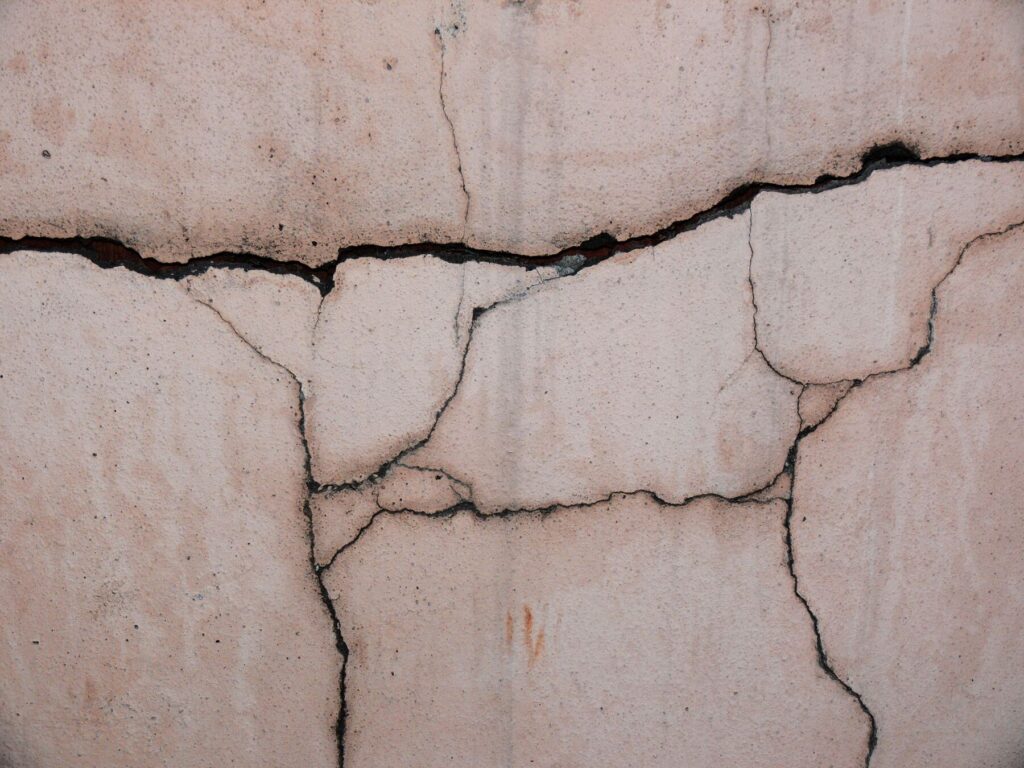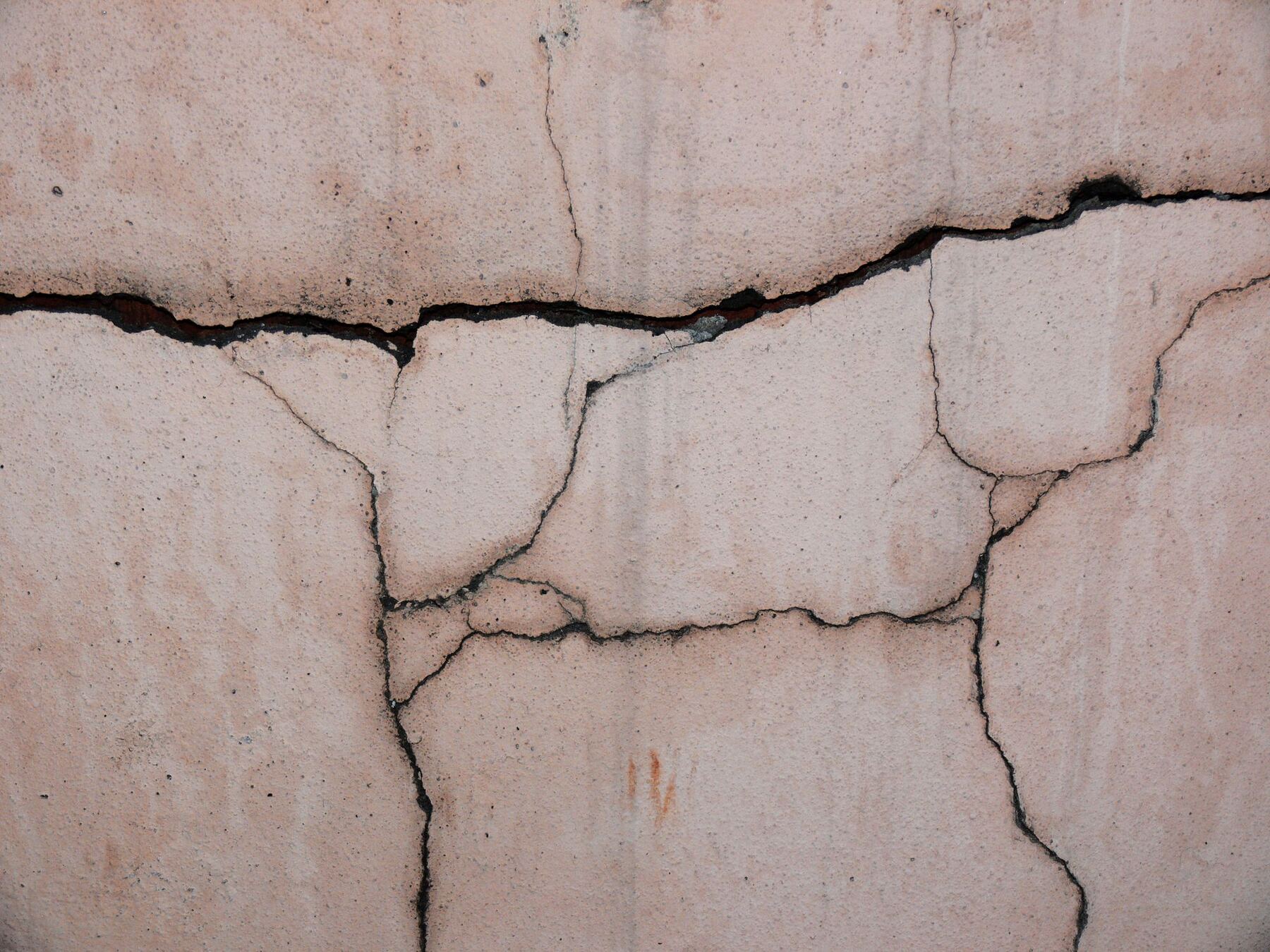
Concrete shrinks as it cures, so hairline cracks are common and usually harmless. Cracks that leak, widen, run diagonally from corners, or come with doors that stick are telling you something is moving.
What you’ll notice
- Cracks in basement walls or slabs, especially ones that leak
- Stair-step cracks in block or brick
- Gaps between the wall and floor, or around windows
- Doors and windows that stick or won’t latch
- Bowing or leaning basement walls
Why it happens
Clay swells when it is wet and shrinks when it dries, so a foundation in red clay is pushed and released every season. Poor drainage makes the swing bigger. Over years that can crack and push walls.
What we check on the inspection
- The width, direction and pattern of each crack
- Whether walls are bowing or leaning, measured
- Drainage and grading that may be driving the movement
- Signs of settlement inside the house
How it gets fixed
Leaking cracks in poured walls are injected with epoxy or polyurethane from the inside. Structural movement calls for reinforcement such as wall anchors, bracing or piers, and it nearly always goes with fixing the drainage that caused it.