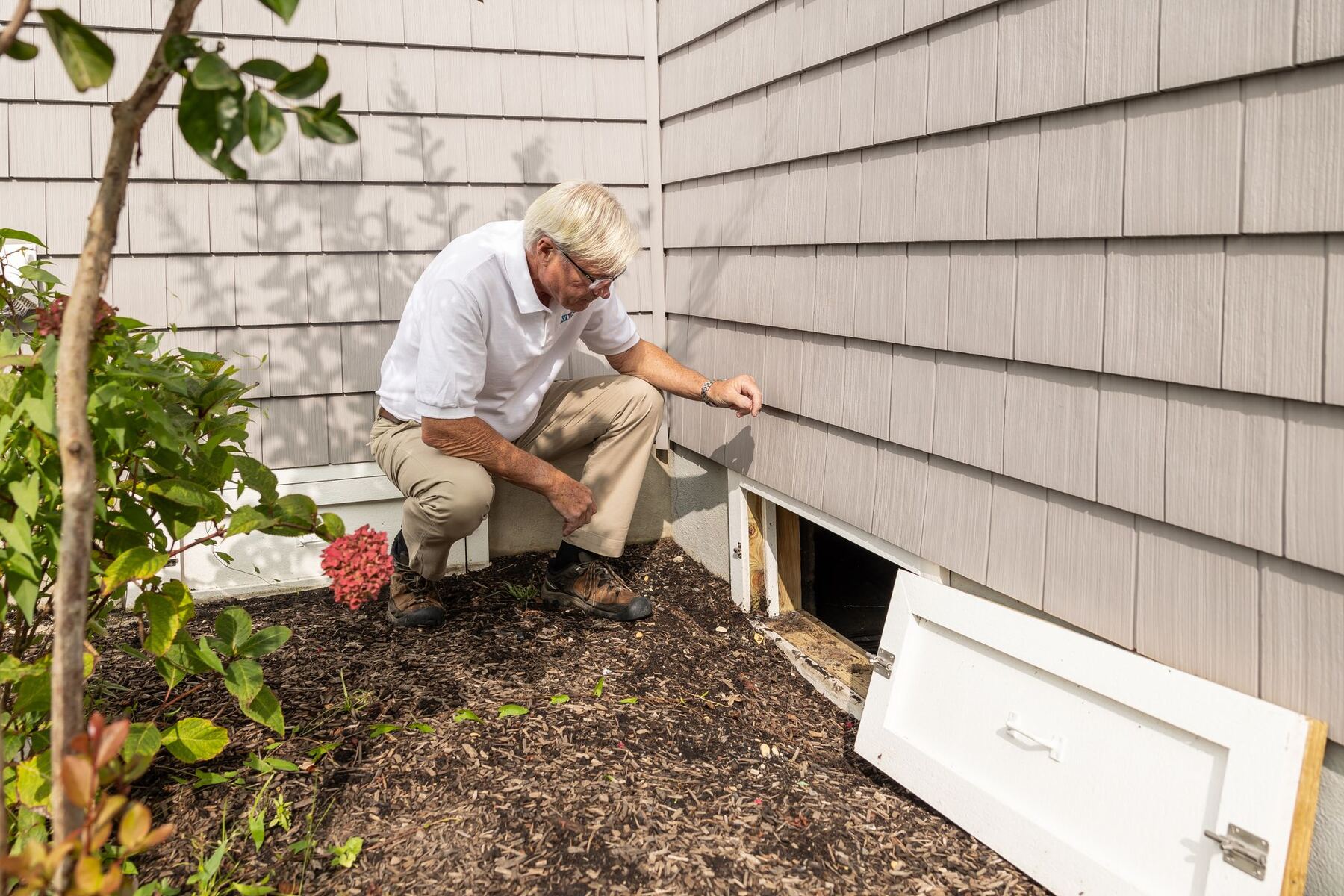
Crawl spaces get wet two ways: water coming in from outside, and humid air condensing on cool surfaces. Both lead to the same place: damp insulation, mold on the joists and floors that start to sag.
What you’ll notice
- Musty smell in the house, especially in summer
- Floors that feel soft or bouncy, or doors that start to stick
- Insulation hanging down or wet to the touch
- Standing water or mud after rain
- Mold or white fuzz on the wood framing
Why it happens
Vented crawl spaces pull in hot, wet summer air, and it condenses on the cooler ground and framing. Add runoff from the yard and an open dirt floor, and the space never dries out.
What we check on the inspection
- Standing water and where it enters
- Moisture readings on the joists and subfloor
- Vents, the vapor barrier (if any) and insulation
- Grading and downspouts on the outside
How it gets fixed
Fix the water first: drainage outside, and a perimeter drain and sump inside if it is needed. Then a heavy vapor barrier on the floor and up the walls, sealed vents, and a dehumidifier sized for the space.